Monday, August 19, 2013

Tackling

If you are a football fan, then you know that the start of football season is less than two weeks away.  One of the hot button issues this off season has been tackling, specifically as it relates to hitting another player in the head or a tackler using his head to hit another player with.  The National Athletic Trainers Association (NATA) released a position statement last week urging officials to consistently penalize players that lead with the crown of their head.  The full statement can be seen here.  I've heard a lot of coaches, analysts, and former players complaining about the new rules and the fact that the NCAA and NFL officials will call more penalties on these types of hits.  While it will change the way some players tackle, the benefits of these new rules far outweigh the risk of a player potentially missing a tackle because he cannot lead with his head.  I will outline the theory behind these new rules below.

As you can see in the picture above, the tackler on the right of the screen is making contact with the offensive player with his head down, or in a flexed position.  This results in axial loading of the cervical spine.  When the head is in a natural, upright position, there a slight forward curvature of the cervical spine.  When the neck is flexed and the head is down, this removes the natural curve from the cervical spine, and easily allows
the force to be transmitted from the head down the cervical vertebrae.  In the picture directly above, you can see how the spine is loaded, and as the amount of force increases, the amount of deformation to the cervical spine also increases.  This can ultimately result in a fracture and/or dislocation of the cervical vertebrae that causes paralysis.  The only tackling technique that results in axial loading to the cervical spine is one in which the head is down and contact is made to the crown of the head.  While it is still possible to sustain a neck injury when tackling with the head up, the chances of sustaining a life threatening/altering injury are greatly decreased.  This article contains more information on tackling techniques and the dangers/risks associated with head down tackling.  While I am sure this issue will remain a controversial topic, the best way to prevent catastrophic head/neck injuries is to prevent players from tackling with the head down.


Tuesday, July 30, 2013

Tim Hudson's Injury


If you are a baseball fan, then you have probably heard and seen about the injury to Braves' pitcher Tim Hudson last week.  While covering 1st base, Eric Young Jr. inadvertently stepped on Hudson's right leg just above the ankle on the lateral side.  Early reports where that Hudson fractured his ankle.  This is a very vague description, as there are several bones in the ankle.  After undergoing surgery, it was revealed the Hudson fractured his fibula and tore his deltoid ligament.

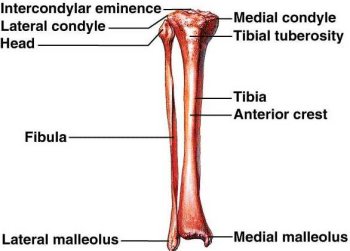
The fibula is the bone located on the lateral side of the lower leg.  It runs from just below the knee down to the ankle, and forms the lateral portion of the ankle.  The very distal (bottom) end of the fibula is called the lateral malleolus.  Looking at the picture of the injury, Hudson fractured his fibula just above the lateral malleolus.  Since the fibula is thinner than the tibia and doesn't play as large a role in weight bearing, the recovery can be easier (still difficult) than a fractured tiba (the medial shin bone that bears about 90% of our weight when standing).  Hudson also tore his deltoid ligament, which is the thick ligament on the medial side of the ankle.  It is actually a collection of four ligaments shaped like a triangle (deltoid).  It helps prevent the ankle from excessive eversion (when the bottom of the foot moves away from the midline, such as in the picture above).

Although Hudson is 38 years old, he has a pretty good chance of pitching again.  His rehab from the injury will probably take 3-6 months, and he should be ready to go by spring training.  Hopefully he can make a full recovery.

Friday, June 28, 2013

Platelet-Rich Plasma Injections

During the last blog post, I mentioned that one of the treatments Bryce Harper received for his injured knee was platelet-rich plasma injections.  This has become a popular treatment among athletes these days.  It is typically used during the inflammatory phase of the healing process to help accelerate recovery.  It involves taking a sample of blood from the same patient, separating out the platelet rich plasma, and then injecting the plasma into the injured tissue, such as a tendon or a ligament.  The patient must avoid exercise for a few days before starting or re-starting the rehabilitation program.  There are animal studies that have shown it is effective, and many athletes have claimed it has helped them improve.  It will likely become an even more popular treatment choice in the future.

Tuesday, June 11, 2013

What's wrong with Bryce Harper's Knee?

I apologize for the delay between blog posts.  Things were very hectic at the end of the spring semester and the beginning of the summer.  If you are a baseball fan, then you know Bryce Harper, the young star outfielder for the Washington Nationals, injured his knee over a month ago when he collided with the outfield wall.  Haper missed a few games, played in a few, and then recently went on the disabled list.  So, what injury did Harper sustain?

Harper was diagnosed with bursitiis, which was confirmed today by Dr. Andrews.  Bursitis is inflammation of a bursa.  A bursa is a fluid filled sac that is found near many of our joints, such as the knee, ankle, elbow, and shoulder.  In the picture above, you can see that there are four bursa around the knee.  It is likely that Harper injured his prepatellar bursa when he ran into the wall.  The prepatellar bursa is located directly above the patella.  It is very superficial and easily injured during collisions.  When a bursa sac is irritated, it can cause a lot of swelling and inflammation around a joint.  This can make movements of the knee painful and difficult.  It generally does not cause swelling within the joint, because the bursa is located outside the joint.  The best course of treatment for bursitis is rest and anti-inflammatory medication.  However, this option is not often chosen during the middle of a competitive season.  Because Harper's knee was not responding, they had to place him on the disabled list.  I will discuss the treatment he received for this injury from Dr. Andrews in the next blog post.

Saturday, April 13, 2013

Rash of Injuries


There have been a lot of injuries lately in professional sports, from Zack Grienke to Jose Reyes to Kobe Bryant.  On Wednesday night, Grienke, a right handed pitcher for the Dodgers, fractured his left clavicle after fighting with Carlos Quentin.  It's difficult to tell if the injury occurred during the initial collision or when Grienke hit the ground.  The clavicle serves as the link between the axial skeleton and the appendicular skeleton.  Anytime you move your shoulder, the clavicle rotates as well.  Although Grienke broke his left clavicle, and he is right handed, the left arm is still important for a right handed pitcher.  Grienke had surgery to place a rod in the clavicle and help stabilize it.  The Dodgers estimate he will be out for around 8 weeks.  Once the injury heals, he will have to build his arm strength back up and undergo a rehabilitation assignment in the minor leagues before he can pitch in a major league game.  This will likely take about 2-3 months.

Thursday, March 28, 2013

Cameron is Two

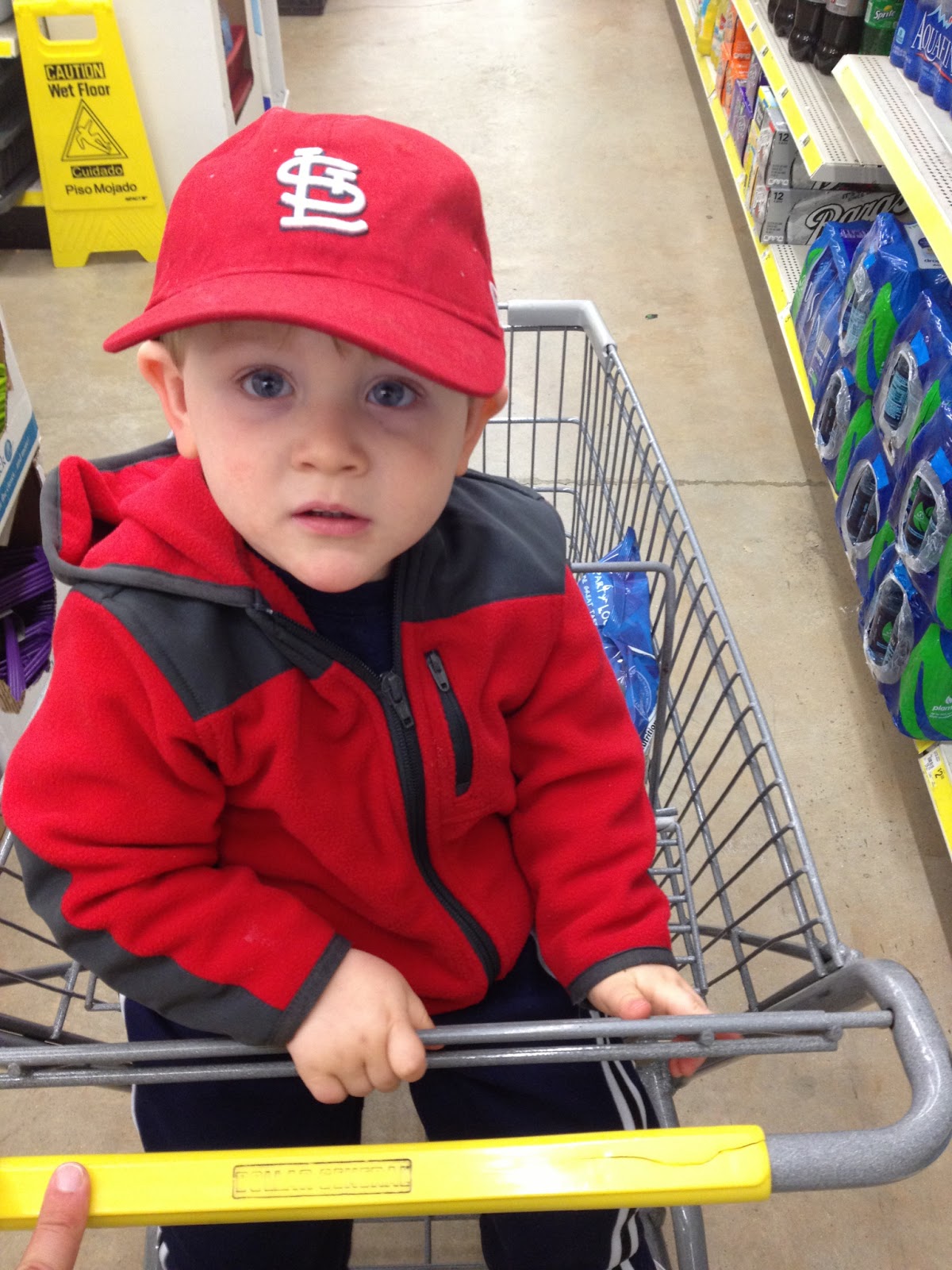
This post is not really kinesiology related, but Cameron turned two last Friday, and I thought I would add some pictures of him to the blog.  He has grown up so much the past two years and is really smart.  I said I wouldn't try to force him to learn his anatomy, but he really enjoys learning information and I just couldn't resist.  He can point to and say his brain, ears, eyes, nose, mouth, pecs, heart, belly, elbow, shoulder, patellas (it comes out more "tella", but that's impressive for a two year old), and ankle.  He can also stretch, show his muscles, and he likes to try and do pushups.  Who knows, he might just follow in my footsteps and pursue a career in kinesiology!  Below are some pictures of him.
 Maybe a future professor?

 He's finally started wearing baseball caps, so of course it has to be a Cardinals hat!

 Pointing to his pecs.

 Showing his belly.

 Stretching.

He's gained almost 25 pounds and grown around 15 inches in 2 years.

Friday, March 22, 2013

There is hope

If you have read this blog in the past, then you know I hate the term "muscle memory."  Just a short recap, but the reason for this is that the muscle cannot remember anything.  All movement is a coordinated process between the nervous system and the muscular system.  However, athletes, coaches, and even so called experts on ESPN (I'm talking about you Sport Science Guy) continue to use the term.  It was refreshing to read an article this week about Cleveland Indians pitcher Trevor Bauer and his attempt to change his pitching mechanics, and to hear him use the words "neuromuscular programming" instead of "muscle memory."  He essentially said that by attempting to change his pitching mechanics, he is trying to overwrite 10 years of neuromuscular programming.  I don't know a lot about Bauer but he seems like a very smart guy.  He is essentially attempting to make some changes to his throwing motion, and this will require the brain to activate different motor units at different frequencies and with different timing patterns.  Neuromuscular programming is a good description of what is going on.  It is certainly better than muscle memory.  Hopefully more athletes and coaches will start to use this terminology and it will start to replace incorrect terminology.